
Paper Cup Machine: Ultrasonic or Hot-Air Sealing?
Ultrasonic or hot-air paper cup machine sealing? Compare catalog speeds and cost per 1,000 good cups to match your budget and output.
An affordable paper cup machine that keeps up with orders is not decided by a technology label alone. On SAGLIN’s ZBJ-OC12 and ZBJ-DP35, ultrasonic and hot-air sealing work at different joints, and the right choice depends on budget, accepted cups per shift and operating cost per 1,000 good cups. This guide covers the two mechanisms, a six-dimension comparison, material matching, leakage location and a purchasing plan with six common questions.
1. Quick answer: identify the sealing location first
Looking for an affordable paper cup machine that can keep up with your orders? Focus your investment on three priorities: an initial purchase within budget, enough accepted cups per shift and a competitive operating cost per 1,000 good cups. Match the machine to your cupstock, molds and sales targets—not just a technology label.
SAGLIN’s published specifications give you a concrete starting point: 70–80 cups/min for the ZBJ-OC12 and 60–80 pieces/min for the ZBJ-DP35, covering cups and larger containers across the two model ranges. Choose the model for your product first, then confirm output with your actual material and molds. These are catalog speeds, not guaranteed accepted-product output.

Ultrasonic and hot-air sealing are not necessarily competing choices. A paper cup machine can use ultrasonics at the side seam and hot air at the bottom, as SAGLIN’s ZBJ-OC12 and ZBJ-DP35 specifications show. Another manufacturer’s LF-110 documents this combination too; its performance does not transfer to SAGLIN machines.
For paper cup machine sealing, first ask which joint is involved. The side seam joins the overlapping body blank. The bottom joint connects the bottom disc to the lower body around a ring. Their intersection contains overlapping layers. Rim curling shapes the drinking edge; it does not seal a lid. This article concerns forming empty cups, not filling beverages or closing filled packages.
2. How paper cup machine sealing works: the two mechanisms
Ultrasonic sealing transmits mechanical vibration through tooling. Concentrated vibration energy generates local heat at the joining interface; a thermoplastic sealing layer softens or melts, wets the opposing surface and forms a bond under suitable pressure. With single-sided PE-coated cupstock, the coating can join an uncoated paper surface; two thermoplastic layers need not melt together. It is not a heat-free process and does not weld paper fibers together. Tool geometry, material structure and contact conditions matter. Herrmann describes energy focusing and recommends testing original materials.
Hot air heats the sealing layer before the joint is pressed together. At the cup bottom, heating works with subsequent folding and knurling to form and consolidate the joint. Leister’s white paper discusses hot-air sealing of coated paper-based packaging. Hot air is not inherently restricted to bottoms: other machine designs may use it at side seams.
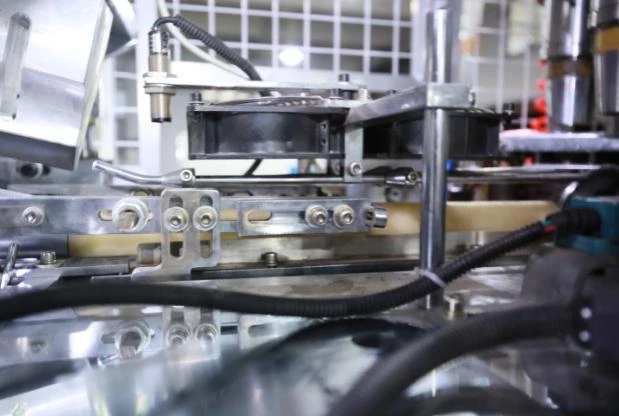
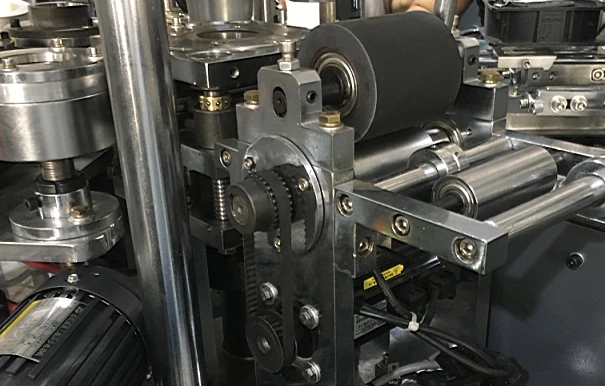
Neither method is universally better. Compare the complete machine, material, cup geometry and acceptance results, not an isolated technology label. No universal speed advantage or energy-saving multiplier follows from the sealing principle alone.
A 2026 study compared side-seam sealing of two single-sided extrusion-coated cupstocks (PE and a bio-based polymer) on a Debao NewTop138s. Its abstract reports better ultrasonic sealing consistency in that experiment, not SAGLIN validation or a universal conclusion. It establishes no guarantee of production yield, leak-free cups or energy savings. Heat input, pressure, time, moisture and wettability interact; hotter is not automatically better.
3. Six dimensions for a meaningful comparison
| Dimension | Ultrasonic sealing | Hot-air sealing |
|---|---|---|
| Energy delivery | Vibration generates local interface heat | Heated airflow transfers heat to the sealing layer |
| Location in these SAGLIN models | Body side seam | Bottom heating before bottom forming and knurling |
| Material requirement | Compatible thermoplastic layer and joint structure | Compatible heat-sealable layer and joint structure |
| Process variables to validate | Energy delivery, contact, tooling and timing | Air delivery, heating exposure, pressing and timing |
| Tooling and maintenance focus | Sonotrode/anvil condition and contact geometry | Heater/nozzle condition, airflow path and bottom-forming tooling |
| Evidence for purchasing | Tests on actual blanks, seams and finished cups | Tests on actual bottom stock, joints and finished cups |
These are evaluation dimensions for a paper cup machine purchase, not operating recipes. Settings must follow the supplied machine documentation and qualified technical support.
4. Match the coating structure, not just the paper label
The two SAGLIN pages list single- and double-sided PE-coated paper. Single PE is commonly used for hot drinks; double PE is commonly used for cold drinks exposed to condensation. The outer PE layer reduces external moisture absorption; it does not prevent condensation. Double PE means coating on two faces, not a double-wall insulating cup. This supplier guidance is not independent certification or a suitability guarantee. Stora Enso describes one- or two-sided polymer coatings chosen for the contents and protection needed, with coatings providing sealing and barrier properties and PE resisting moisture. Validate beverage type, filling temperature, holding time, external condensation and the material supplier’s intended cup design together.
Confirm the complete layer structure, coating weight on each side, total grammage and which face enters each joint. Submit both cup-body blanks and the bottom roll; a body-material approval does not automatically approve the bottom stock. Confirm how the supplier defines the quoted grammage.
PLA, water-based barriers and other structures are not confirmed as supported on these two machines by the cited specifications. Require written compatibility confirmation and trials, rather than assuming a substitute will seal. A material name or sealing method alone establishes neither plastic-free status nor recyclability, compostability or regulatory compliance.
5. Locate actual leakage before assigning a cause
A wet outer wall is not automatically a leaking cup. With cold contents, moisture may condense from ambient air. Check for spills and condensation first, then use an agreed, controlled test to identify the first actual liquid escape point. Record orientation, material lot, elapsed time and photographs; liquid can travel away from its origin.
| Observed location | What to document | What it does not prove |
|---|---|---|
| Side seam | First emergence along the overlap; seam continuity and blank alignment | That ultrasonic settings alone caused the defect |
| Bottom ring | First emergence around the base; disc position and forming pattern | That hot-air heating alone is responsible |
| Side-seam/bottom intersection | First emergence at the multilayer junction; body overlap and bottom-fold geometry | Which station failed: side joining, bottom forming and material variation can interact |
| Paper wall away from joints | Local wetting or penetration; coating damage, exposed edges and handling history | A seam defect; first exclude condensation and surface spills |
Before inspecting tools, stop the machine safely, isolate energy sources, release or secure stored energy, and allow hot parts to cool. Qualified personnel should follow the manufacturer’s procedure. Do not reach into moving equipment, bypass guards or try generic temperature, pressure or amplitude adjustments.
6. Paper cup machine affordability, output and SAGLIN configurations
Published configurations, checked 23 October 2026:
| Model and intended format | Published speed | Published sealing configuration |
|---|---|---|
| ZBJ-OC12: cups, 3–16 oz | 70–80 cups/min | Ultrasonic side seam; hot-air bottom heating; heated bottom knurling for single PE / water-cooled knurling for double PE |
| ZBJ-DP35: bowls, containers and large cups, 10–50 oz | 60–80 pieces/min | Ultrasonic side seam; hot-air bottom heating; heated bottom knurling for single PE / water-cooled knurling for double PE |

Catalog speeds are not promises of sustained accepted-product output. The supplied OC12 catalog lists 180–350 g/m² paper; the DP35 detailed table lists 170–450 g/m², while its summary lists 170–350 g/m². This unresolved DP35 discrepancy is not a general compatibility guarantee: obtain written confirmation for your stock and offered configuration. Validate performance with your actual cup or bowl format, material and molds under agreed acceptance conditions.

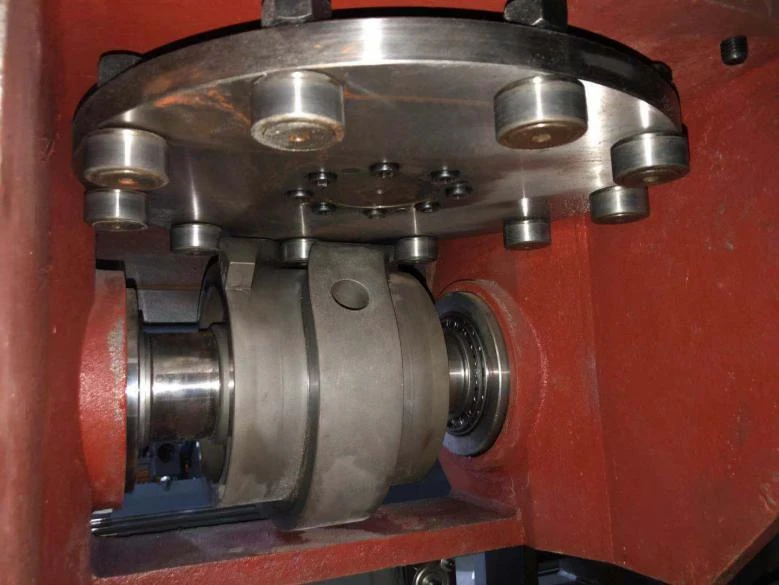
Both supplied catalogs describe PLC/HMI control, automatic lubrication, sensor-based fault detection with automatic stopping, and an open-cam drive. Confirm the supplied equipment and functions in the quotation; these features establish neither a cost-reduction percentage nor a guarantee that one operator can run multiple machines.
These are catalog statements, not acceptance guarantees. Published ranges do not mean every size, material and tooling combination is feasible. The double-PE water-cooled knurling arrangement belongs to these configurations, not to every double-PE machine. Confirm whether the recirculating cooling device is included and specify water, electrical and compressed-air requirements in the quotation.
Both pages list 380 V, 50 Hz, three-phase power. Compare this with the Brazilian site’s actual voltage and frequency; do not assume 60 Hz compatibility. Request written confirmation of the offered electrical configuration.
Before ordering, agree an acceptance protocol specifying test liquid, temperature, fill volume, holding time, sample size and pass/fail criteria. Include samples from startup, stable running and restart. Document material lots, molds and agreed production conditions. These are negotiated tests, not universal performance guarantees. Ask for results using your production stock and a clear list of quotation exclusions.
Mechanical peel/strength tests and liquid-leak tests assess different properties: they complement, not replace, each other. Include checks on finished cups because forming stresses can affect seams; hand-tearing results also depend on the operator. Agree methods and criteria rather than adopting a universal threshold.
6.1. Make your budget work for your orders
- Budget-focused configuration: compare the molds and accessories required for your cup formats. Put your budget into the equipment your orders need, rather than paying for unrelated configurations; ask the quotation to distinguish required items from optional extras.
- Capacity that serves orders: assess good cups/hour as accepted cups divided by total test hours. Use the full agreed test period, including downtime, and exclude rejected cups from the accepted count. This gives you a practical basis for matching capacity to shift targets instead of relying on a headline speed.
- Value beyond purchase price: calculate operating cost per 1,000 good cups = total operating cost for the same period / accepted cup count × 1,000. Include paper consumption and scrap, electricity, labor and maintenance; do not count scrap material twice. Compare the landed equipment investment separately, including freight, import duties, applicable taxes, installation and required accessories. This operating-cost measure is not a complete total cost of ownership (TCO).
For broader selection context, see the Paper Cup Machine Guide.
Ready to match your budget to productive capacity? Send SAGLIN your cup formats and volumes, cupstock specifications, accepted-cup target per shift, budget range, destination city and site power supply. Use the ZBJ-OC12 and ZBJ-DP35 product pages to request a matching configuration and an itemized quotation, with required equipment, molds, accessories and exclusions clearly identified.
7. Six frequently asked questions
Does an ultrasonic paper cup machine still need hot air?
Yes, depending on its design. Both SAGLIN models here specify ultrasonic side sealing and hot-air bottom heating. “Ultrasonic” does not describe every station.
Does ultrasonic sealing mean no heat is produced?
No. Vibration produces local interface heat; a thermoplastic sealing layer softens or melts, wets the opposing surface and bonds under pressure. Single-sided PE can join an uncoated paper face without two thermoplastic layers fusing together; paper fibers themselves are not welded.
Is double PE only for hot drinks?
No. Neither coating count alone defines hot- or cold-drink suitability. Validate the drink, filling temperature, holding time, condensation exposure and supplier-approved structure.
Does a leak where the side seam meets the bottom identify the faulty station?
No. It identifies an inspection location. Check the interacting overlap, folds, material and process records before assigning responsibility to a station.
Can a supplier promise compatibility from a sample cup alone?
A finished sample is useful but insufficient. Supply body blanks, bottom-roll specifications and intended use conditions; agree trials and written acceptance criteria for the offered configuration.
Is the lowest purchase price always the best value?
No. Choose the configuration that meets your actual accepted-output and cost targets. Compare required molds and accessories, tested good cups/hour, landed equipment investment and operating cost per 1,000 good cups on the same basis. A lower initial price alone does not establish better value.
Get a configuration that matches your budget and output targets
Send your cup formats and volumes, cupstock specifications, accepted-cup target per shift, budget range, destination city and site power supply to receive a matching configuration and an itemized quotation.
Request a Quote
