
Hot Stamping Machine: 3 Types and How to Choose the Right One
Manual, pneumatic or servo? Compare the three machines by volume, operation and repeatability — and see when the JXZC-95 makes sense.
Choosing a hot stamping machine comes down to three questions: volume, operator involvement and repeatability. Manual suits frequent changeovers and short runs; pneumatic brings repeatable pressure; automatic servo sustains continuous production. Choose by workload and repeatability — not by automation level alone.
1. Quick comparison: manual vs. pneumatic vs. servo
All three machines produce clean foil impressions, but they fit very different workflows.
| Type | Best for | Operator involvement | Changeover flexibility | Typical limitation |
|---|---|---|---|---|
| Manual | Samples, personalization and short runs | High | High | Output depends on the operator |
| Pneumatic | Regular small-to-medium batches | Medium | Medium to high | Requires a compressed-air supply |
| Automatic servo | Stable products and continuous production | Low | Medium | Higher investment and application-specific setup |
The right choice depends on your real workflow, not the promise of automation.
2. What each machine does
Manual: relies on the operator to position and press each piece — ideal for samples, monograms and short runs with frequent changes. It costs less to start, but impression consistency depends on the operator’s technique.
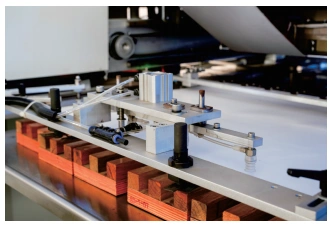
Pneumatic: uses compressed air to generate pressure, making it more repeatable than a manual press. The operator still loads each piece, but effort and variation drop. It requires a compressor and tuning for each foil and substrate combination.
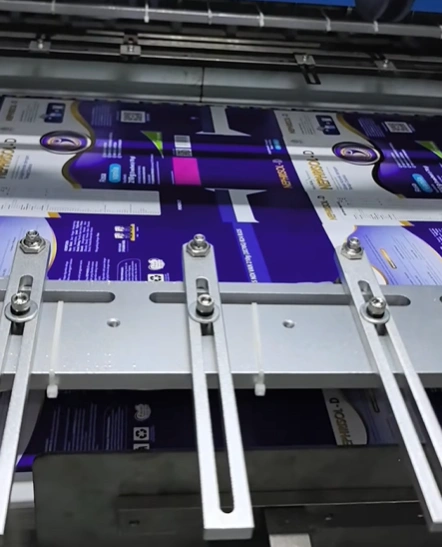
Automatic servo: coordinates feeding, foil advance and pressure through a servo motor — designed for repeatable products and long runs. It reduces handling and stabilizes registration, but demands more investment and setup for new formats.
3. Specifications that decide quality
Before comparing machines, understand the specifications that decide whether the impression comes out clean and consistent — and the typical ranges for each machine type.
| Specification | Typical range | Why it matters |
|---|---|---|
| Die temperature | 90–180 °C (up to 300 °C on some substrates) | Activates the foil adhesive; outside the window the foil won’t transfer or burns |
| Temperature stability | ±5 °C | Larger swings cause incomplete transfer or adhesive burn |
| Pressure | Manual 1–3 t · Pneumatic 5–10 t · Servo 40 t+ | Transfers foil without crushing the substrate or marking the back |
| Cycle | Manual 8–15 s per piece · Automatic up to 26 cycles/min | Sets the real production rate and cost per piece |
| Stamping area | Confirm the actual design width × height | Large or multi-up pieces need a bigger platen |
Temperature, pressure and time move together: a clean transfer only holds if all three stay stable.
4. Platen, pressure and speed: calculate by contact area
When evaluating a hot stamping machine, don’t start with tonnage alone. The right question is: what area of the die actually touches the substrate at the same time?
- Useful platen area and real contact area: calculate the sum of the parts that receive pressure, not just the total die size.
- Applied pressure: enough to transfer the foil without crushing the paper or marking the back.
- Temperature, time and speed: clean adhesion and defined edges only hold if the machine keeps feeding, registration and pressure stable at the promised rate.
5. Why servo control matters (JXZC-95)
Where quality must hold across the batch, servo pressure control reduces the variations common in manual or pneumatic systems — fewer foil failures and stable pressure from the first to the last cycle.
The JXZC-95 combines force, format and control. Here is what each specification delivers in practice:
| Specification | What the JXZC-95 delivers | Why it matters |
|---|---|---|
| Pressure | 40 tons | Robust hot stamping and embossing without crushing the substrate |
| Stamping area | 800 × 530 mm (950 × 650 mm feed) | Large pieces and multi-up in a single pass |
| Speed | up to 26 cycles/min | Continuous production with a lower cost per piece |
| Pressure control | Servo + ball-screw frame | Stable pressure from the first to the last cycle, fewer foil failures |
| Feeding | Anti-double-sheet pre-suction | Prevents duplicated feeding and downtime |
| Application | Flat hot stamping + embossing | Finishing and embossing in a single machine |

6. Five factors to confirm before choosing
The machine choice depends on more than the type. Confirm these five factors before closing the order:
- Product material: leather, coated paper and plastic do not respond to heat and pressure the same way. Provide real samples for testing.
- Stamping area: confirm the actual design width × height, not just the overall product size.
- Batch size: estimate pieces per hour, shift and month. A realistic target is more useful than the manufacturer’s theoretical maximum.
- Positioning tolerance: determine whether visual alignment is acceptable or a dedicated jig is required.
- Changeover frequency: frequent changes favor a manual or pneumatic setup; stable high-volume work justifies automation.
7. Which machine should you choose?
Start from your real situation — not from the level of automation itself. The table sums up the decision.
| Your scenario | Typical signal | Recommended machine | Why |
|---|---|---|---|
| Samples, personalization and frequent changeovers | Short runs and formats that change constantly | Manual | Fast changeover and lower upfront investment |
| Recurring small-to-medium batches | You need repeatable pressure without a high cost | Pneumatic | More stable pressure than manual, mid-range cost |
| Stable product and continuous demand | High volume and low cost per piece are decisive | Automatic servo — JXZC-95 | Continuous production, less labor and stable pressure |
Not sure between manual and pneumatic? See the difference between the three types.
8. Frequently asked questions about hot stamping machines
The questions we hear most from print shops and converters evaluating a hot stamping machine:
What is the difference between manual, pneumatic and servo machines?
A manual machine depends on the operator and suits short runs; pneumatic uses compressed air to stabilize pressure on medium lines; automatic servo applies pressure and feeding through a servo motor, with consistent quality on large volumes.
How much does a hot stamping machine cost?
The value varies with the automation level, stamping area and pressure — add molds, foils, installation and maintenance. Tell us the stamping area, substrate and volume to receive a proper proposal.
What is servo pressure control and why does it matter?
Servo control replaces manual or pneumatic adjustments with a servo motor, which applies pressure precisely and repeatably. This reduces foil failures and avoids excessive pressure — essential for consistent premium finishing.
Do I need embossing or just flat hot stamping?
It depends on the effect: flat hot stamping transfers foil onto the surface; embossing creates three-dimensional relief. If your product needs a raised metal logo, you need both — and the JXZC-95 supports both.
Hot stamping rewards those who treat the purchase as engineering, not as a catalog order. SAGLIN Machinery designs surface finishing equipment for the Brazilian production reality — send your material and volume for a technical evaluation of your project.
Ready to choose the right hot stamping machine?
Get a technical evaluation of your project and a quote for the right model for your production volume.
Request Technical Evaluation
