
Surface Finishing Equipment
Thermal, wet, dry and solventless laminators for finishing printed materials, packaging and labels.
Surface Finishing Equipment
Explore the complete range of SAGLIN laminators and finishing equipment, designed for maximum efficiency and quality.
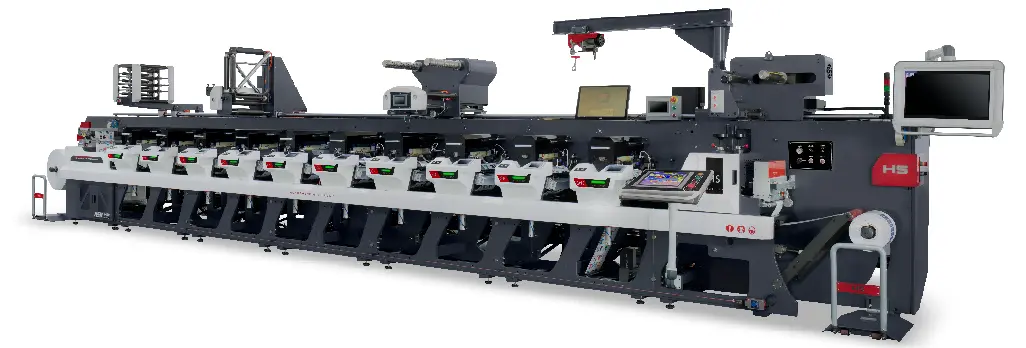
SFlex-350 Flexo Printing Press
7-color flexographic printer with UV drying for films, labels and composite materials. High precision and speed for continuous production.
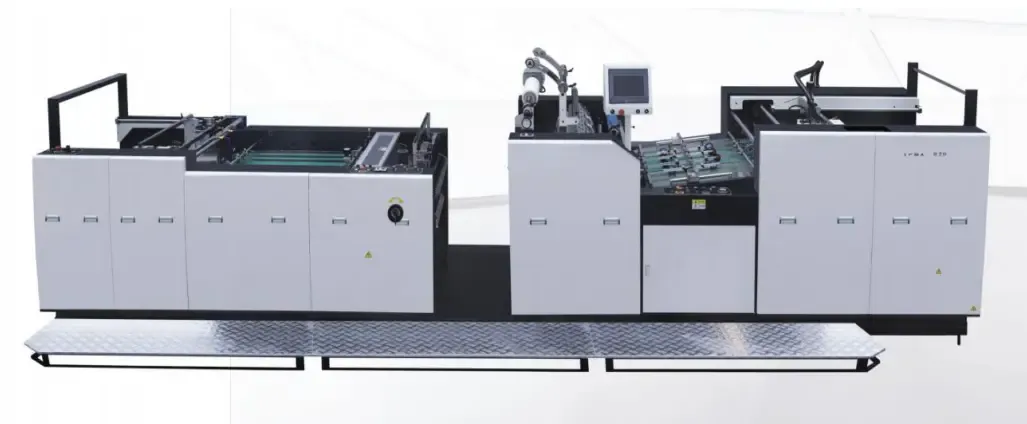
YFMA-850 Automatic Laminator
Automatic laminator for thermal BOPP, PET, PVC and metallic films. Ideal for packaging, boxes, books, magazines and paper bags.

JXZC-95 Automatic Servo Hot Stamping Machine
Hot stamping machine with servo control, 40-ton pressure and anti-double-sheet system. Ideal for premium packaging, labels and luxury products.

MX-1020 Automatic Cylinder Screen Printing Machine
Automatic screen printing machine for localized UV varnish, special effects and anti-counterfeiting. Ideal for cigarette boxes, beverage boxes and premium packaging.
Why choose SAGLIN?
Our machines are designed to meet the most demanding needs of the packaging industry
Premium Quality
High-strength materials and imported components
Fast Service
Response within 24 hours and specialized technical support
Global Experience
Presence in over 60 countries with local support
Continuous Innovation
Constant research and development to improve our equipment
Frequently Asked Questions
Everything about surface finishing and print protection
– Lamination: plastic film (BOPP/PET) applied over the print. High gloss or premium
matte. High durability. Medium cost.
– UV varnish: polymerized ultraviolet resin.
Selective or full gloss. Medium durability. Low cost.
– Hot stamping: metallic foil
transferred by heat. Metallic effect (gold, silver, holographic). High durability. High cost.
–
Embossing: mechanical pressure for raised or recessed relief. Tactile 3D texture. High
durability. Medium-high cost.
Common combinations: hot stamping + matte lamination for luxury packaging; localized UV varnish + lamination for magazine covers; embossing + hot stamping for certificates and invitations.
No. Compatibility depends on the ink and substrate:
– Works well: offset and digital prints on coated, offset or card paper. The ink must be
completely oxidized (dry).
– Requires attention: prints with oil-based inks that are
not fully dry may experience film adhesion problems (delamination).
– Avoid: very
porous papers (they absorb the adhesive) or papers with non-stick treatment.
Recommendation: always perform sample tests before serial production, especially for jobs with hot stamping or embossing over lamination.
Yes, hot stamping can be applied over both surfaces, but with technical caveats:
– Over coated paper: excellent adhesion. The metallic foil transfers uniformly over the
smooth surface of coated paper.
– Over matte lamination: good adhesion, as long as
the film is compatible with hot stamping (special films with corona treatment).
–
Over gloss lamination: the metallic foil may slip. Direct application on paper before
lamination is recommended.
Ideal temperature: varies according to the substrate (100°C to 180°C). Thinner papers and plastic films require lower temperatures to prevent deformation.
Yes, as long as the following parameters are observed:
– Embossing depth: deep reliefs (>1.5 mm) make folding difficult and may cause
cracking. For folding cartons, keep the relief below 1 mm.
– Material weight: papers
and boards of 250-350 g/m² offer the best balance.
– Embossing direction: align the
paper fiber direction with the fold line to minimize structural stress.
Practical application: cosmetics packaging and luxury products frequently combine soft embossing with automatic folding on folder-gluers.
This generally occurs due to one of three causes:
1. Varnish layer thickness: excessively thick layers take longer to cure and remain
sticky. Adjust the amount via anilox roller or doctor blade.
2.
Insufficient UV curing speed: if the machine speed is too high for the UV lamp power,
polymerization is incomplete. Reduce the speed or increase the power.
3.
Surface contamination: paper dust, oily residue or silicone can impair adhesion. Maintain
regular cleaning of the feeding system.
Ready to modernize your production line?
Contact our sales team and receive a customized quote for your production line.
Request a Quote
